
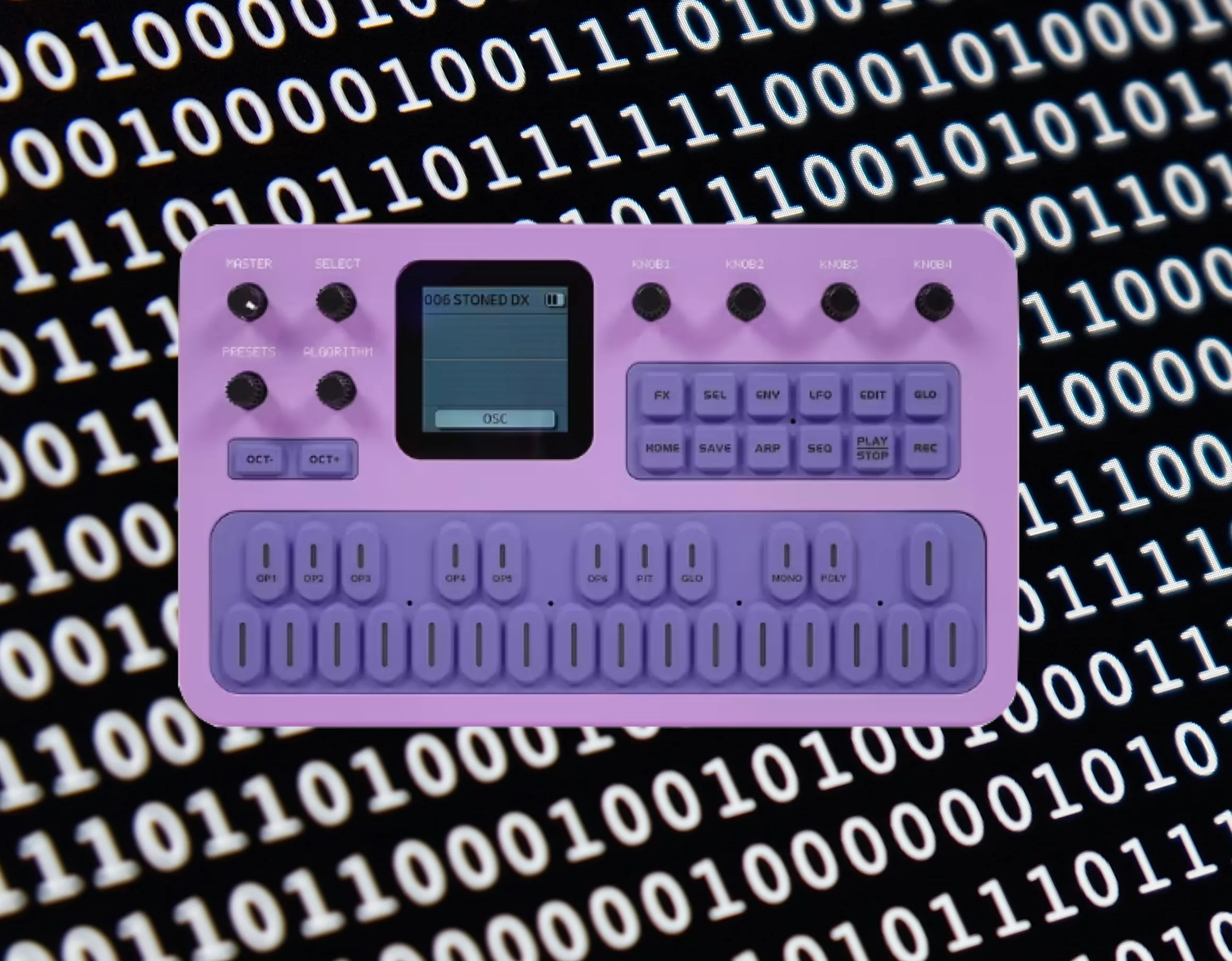
The M-VAVE FM-1 has been causing a stir across the synthesizer landscape this past month, kickstarting the custom firmware boom. Originally released back in June 2026, the original appeal was you could pick one up $45-$75 and have yourself a nifty little FM synth based on the legendary Yamaha DX7. It was not long before keen developers discovered a method to unlock its secrets and leverage the AI-assisted coding boom to re-engineer it and create new features and sounds with their own firmware.
As an affiliate, I may earn a commission from qualifying purchases made through links on this page. This comes at no extra cost to you and helps support the content on this site.
Too many firmwares?
Now there are so many firmwares available it can be hard to know where to start, so folks have created resources to list them out. It started out with the FM-1 Firmware Google Sheet or the fm1-custom-fw resource hub on github listing them all out with short descriptions on what you get and project maturity, then expanded further to curated portals like thefirmwarehub . Now some of these firmware will be better than others, those with a more commercial mindset have dedicated webpages such as Groove OS and Baud Girl which make then immediately more visually appealing than those just on github pages.
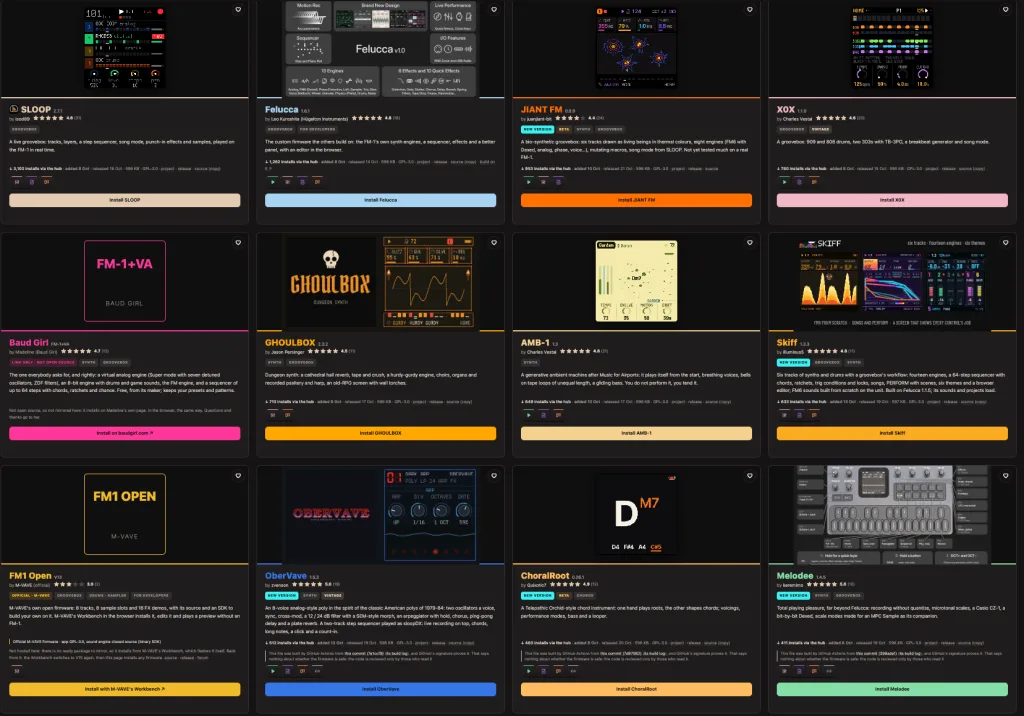
Groove OS is wanting to charge $29 for there fancy looking firmware. There are enough opensource alternatives to avoid it, but I bring it up because I foresee a future where selling firmwares for generic platforms becomes a thing, just like the VST market today in software. 99% of the fm-1 firmwares are opensource.
FM1 Open
Most manufacturers are taking a cautious approach to the custom firmware explosion, since they need to protect their intellectual property and they are in the business of selling hardware and software. There are a lot of products that share a common platform under the hood that just have different firmwares on them such the Roland GO:keys/GO:piano, or much of the Elektron line-up this makes perfect sense to the manufacturer, as the development time to make a platform is considerable so they want to sell as many products based on it as possible. Now from the consumer point of view they might only buy a single instance of the platform and load different firmwares on it at different time. M-VAVE however have embraced the custom firmware. They sit in a spot that the box is so cheap, no-one is scared of bricking it (would you want to test out some AI generated firmware on your brand new Digitakt2, probably not?), and it has become that custom firmware is the ‘killer-app’ its why people are now buying the M-VAVE in the first place. I might even order a second one!
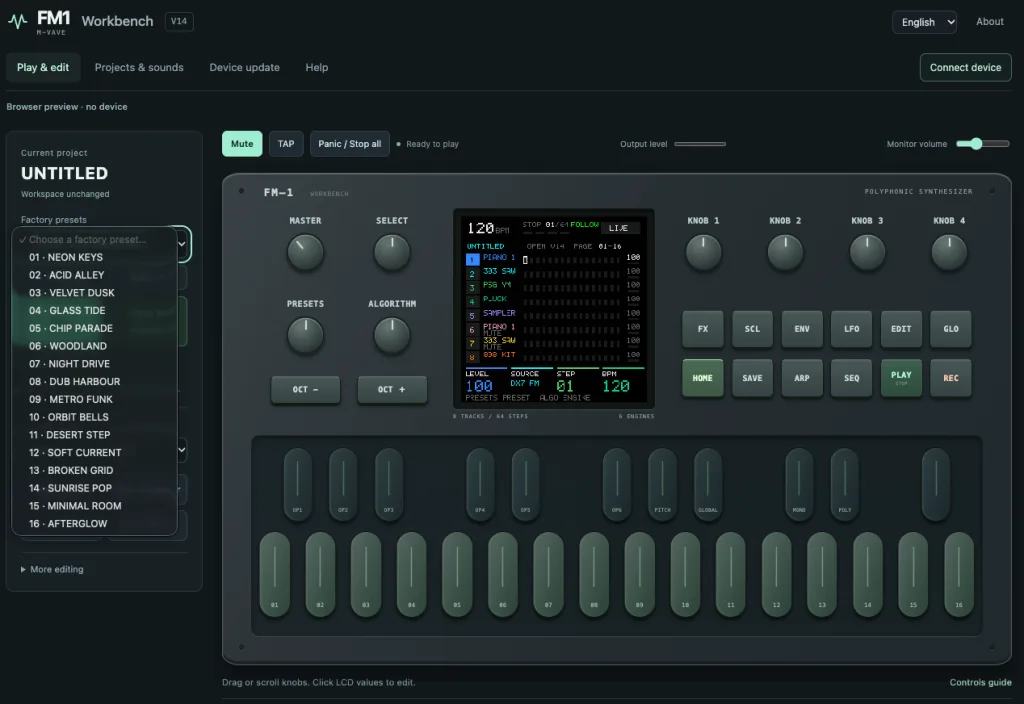
M-VAVE have just launched FM1 Open, which is their own firmware and development project for users and developers, creating a safe environment to go and experiment with direct from the manufacturer. Load up the workbench in a browser and off you go. So now users can use tools in their browsers to easily flash the latest firmwares or revert back to the original all within a safe curated environment.
Don’t Brick it
there are still risks with flashing firmwares if say you disconnected the USB cable during the procedure or some other error, but there are tools for recovery to get out of the ‘bricked’ or ‘soft-bricked’ state.
Popular Firmwares
so what should you try first? Well scroll through one of the resources and see what takes your fancy!
- Felucca (by Hügelton Instruments) the original that kick stared the movemnet is a four operator FM synth with sequencer, arpegiattor and FX.
- X0X (by Charles Vestal) – The Techno / Acid Machine features 2 TB-303 acid synths alongside a TR909 and 808 drumkit!
- FM-106 (by PatttF) – The Roland Juno-106 Emulation, 1-to-1 port of the popular KR-106 engine designed to mimic the famous Roland Juno-106
- GHOULBOX (by Jason Persinger) – Dungeon Synth & Dark Ambient – not a genre that i dig, but love the asthetic from this Felucca fortk and its leftfield and made something different. there are no off the shelf products from Yamaha or Korg like this!
Don’t Forget the SMK-37
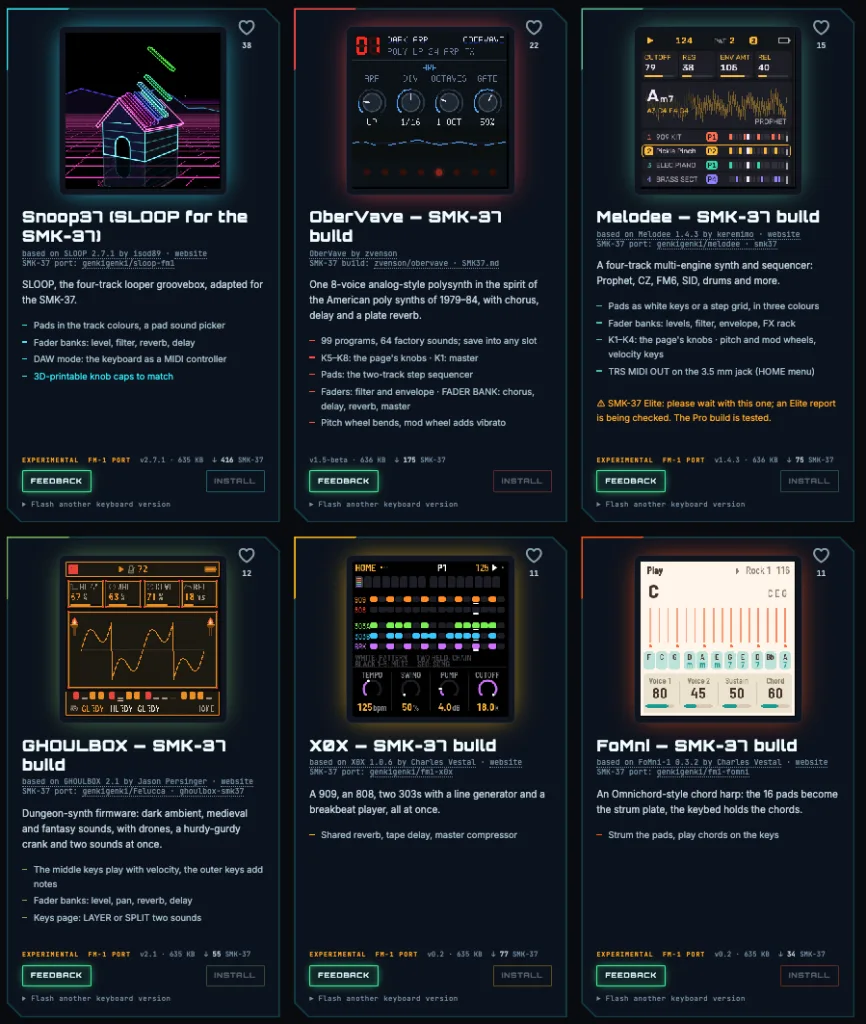
The SMK-37 is a FM-1 with a 37 key keyboard and a few other features, altough it loses the cheeky built in speaker of the FM-1. Internally it is mostly the same (JieLi AC791), so folks have ported the FM-1 firmwares to match up with its controls, since the SMK-37 has extra pads, faders and wheels too. You can get your SMK-37 fix from
https://genkigenki.github.io/smk37
Summary
So, its exciting and rapidly evolving times in the world of custom firmware. The FM-1 is just the beginning with many other devices being besieged with custom firmware options. The rapid rise of A.I. tools, and the low price point of the FM-1 have kicked down the doors so that anyone can become a developer. Sure, not all the results will be worthwhile, but over time the better engineered, presented and curated firmwares will rise to the top.
Of course all this is not something particularly new, if you want a brilliantly engineered device with an amazing interface that can run loads of great music software, then you should definitely get an iPad! Plus a midi controller with it if you want hands-on control. Or if you want to build your dream synth/ drum-machine/ groovebox setup, with knob-per-function you could put together a few Eurorack Modular cases (but you will need several thousands of dollars for this route)
But the FM-1 firmware craze is a new approach and a new audience to the world of DAWless devices. The established manufacturers will be taking notice and the next wave of devices could well be better for musicians as a result.
So I am looking forward to the day I could have a big control surface that looked something like a Roland TR-1000 and an option to flick between different instruments and have the interface update so I know what control does what!